Oysters and sparkling wine: how to tell they're fresh, how to eat them and pairing
Equipa Lusitana Boat · June 24, 2026
There are few pleasures as elegant as oysters and sparkling wine — or, if you prefer, oysters and champagne. But eating oysters the way it’s meant to be done has its tricks: knowing how to pick a fresh oyster, opening it, eating it in the right order and pairing it with the ideal sparkling wine (or champagne). Here’s the practical guide — and, at the end, how to enjoy all of this on board, with the Tagus river all around and Lisbon turning golden at sunset.
How to tell if an oyster is fresh
The golden rule: a good oyster is alive right up to the moment you eat it. That’s what guarantees both freshness and safety. Before you open it (or accept it in a restaurant), check that it has:
- A tightly closed shell — or one that closes on its own when you touch it. If it’s open and doesn’t react, it’s dead: reject it.
- A sea-fresh smell — it should smell of clean ocean, of a beach breeze. A strong smell of ammonia or “old” fish is a bad sign.
- Heavy for its size — a fresh oyster is full of its own liquid (the “liquor”). If it feels light or hollow, it has lost its water.
- Clear, plentiful liquor — when opened, there should be clear (or slightly milky) liquid, never dry or cloudy.
- Shiny, firm flesh — moist, with well-defined edges, that shrinks slightly when you squeeze lemon over it. That reaction is the best proof it’s alive.
When in doubt, smell and look. A fresh oyster invites you to eat it; a spoiled oyster gives itself away straight away by its smell.
How to eat an oyster (step by step)
There’s no mystery to it, but there’s a way to get the most out of it:
- Loosen the flesh. With the little seafood fork, detach the oyster from the muscle that holds it to the shell — that way it slides out in one go.
- Don’t swallow it straight away. Bring the shell to your mouth and chew once or twice: it’s in the chewing that you taste the sea, the sweetness and the mineral finish.
- Drink the liquor. The liquid in the shell is part of the experience — don’t pour it away.
- Go from mild to intense. If you have several kinds, start with the mildest and most delicate and work your way up to the meatier, brinier ones.
- Accompaniments (optional). Rye bread with butter is the classic; between oysters, a sip of sparkling wine “cleanses” the palate.
Why do you put lemon on an oyster?
The lemon does three things at once:
- It heightens the flavour — the acidity lifts the oyster’s sweetness and saltiness, like a pinch of salt on a dish.
- It balances the saltiness — it cuts through the more “sea-like” side of the more intense oysters.
- It’s a freshness test — when you squeeze lemon over it, a live oyster reacts and shrinks slightly at the edges. If it doesn’t react at all, be suspicious.
You don’t have to use it: many enthusiasts eat the oyster plain, to taste the terroir of the sea (the so-called merroir). The classic French alternative is mignonette — wine vinegar with chopped shallot and pepper. A suggestion: try the first one plain, the second with lemon and the third with mignonette, and decide which you prefer.
Oysters with sparkling wine: why it works so well
The oysters + sparkling wine pairing is one of the surest there is — and there’s a reason:
- The acidity and the bubbles “cleanse” the palate between each oyster, balancing the saltiness and the texture.
- The citrus and mineral notes of a good sparkling wine mirror the fresh, marine side of the oyster.
- Serving it well chilled (6–8 °C) is half the battle.
Go for brut or extra brut (dry) — avoid the sweet ones, which clash with the saltiness. Portuguese sparkling wines work beautifully (Bairrada and Távora-Varosa leading the way, made by the classic method) and, of course, champagne. A Blanc de Blancs (100% chardonnay), crisp and citrusy, is a dream match.
How many oysters per person and how to serve them
- As a starter: about 6 oysters per person; half a dozen to a dozen for the real fans.
- Well chilled, on crushed ice, shucked as close as possible to serving time.
- Accompaniments: lemon wedges, mignonette, dark bread and butter. And the sparkling wine, always chilled.

Oysters and sparkling wine on board, in Lisbon
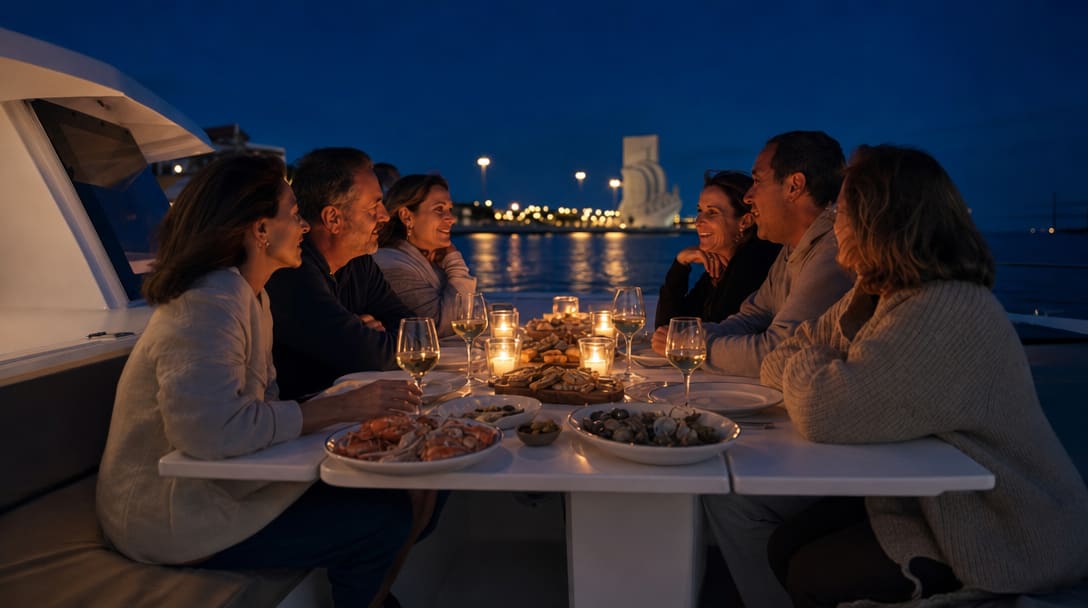
Once you know how to choose and eat them, all that’s missing is the setting. Aboard the Lusitana we bring the toast onto the water: fresh oysters, shucked on the spot and served over ice, with sparkling wine of your choice nicely chilled — all on a private catamaran, just for your group, at the river’s own pace.
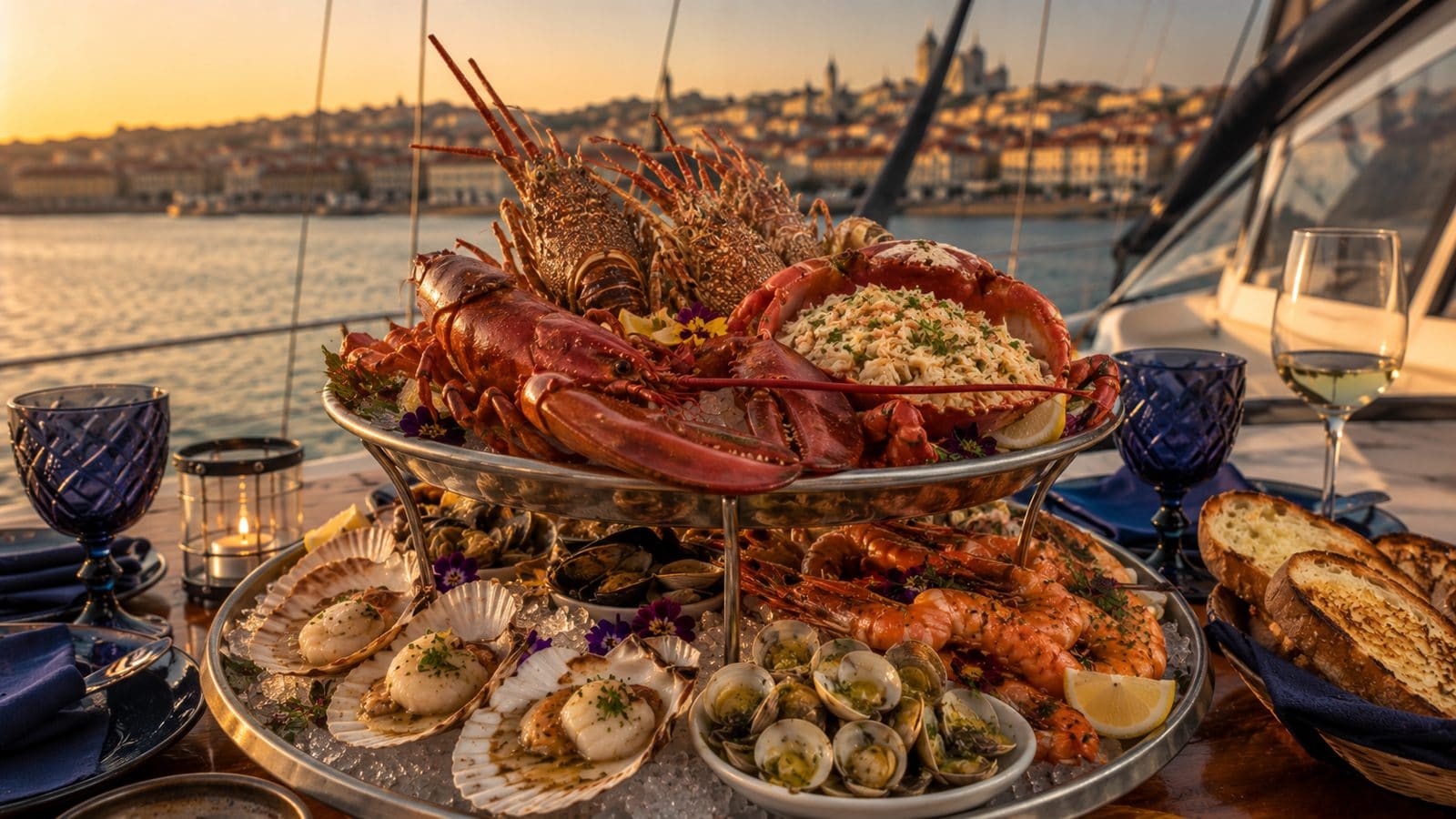
It’s the perfect start to a celebration. For a moment for two, pair the oysters with the romantic cruise at sunset on the Tagus. To go further, combine it with chef food on board — seafood and menus of your choice — or explore the wines with a wine tasting on board. See it all in the oysters and sparkling wine on a boat experience.
Frequently asked questions
How do I know if an oyster is fresh? The shell should be closed (or close when touched), smell of clean sea, be heavy for its size and have clear liquor. When you squeeze lemon over it, a live oyster shrinks slightly — that’s the best test.
Why do you put lemon on an oyster? The lemon heightens the flavour, balances the saltiness and works as a freshness test (a live oyster reacts to the acidity). But you can eat it plain or with mignonette, if you prefer.
How do you eat an oyster? Loosen the flesh from the muscle with the fork, bring the shell to your mouth, chew once or twice to taste the flavour and drink the liquor. Start with the mildest ones and move on to the more intense.
Which sparkling wine pairs best with oysters? A brut or extra brut sparkling wine, well chilled, citrusy and mineral. Portuguese sparkling wines (Bairrada, Távora-Varosa) and champagne — especially Blanc de Blancs — are excellent matches. Avoid the sweet ones.
How many oysters per person? As a starter, count on about 6 per person; half a dozen to a dozen for the enthusiasts.
Fancy putting the guide into practice? Plan your cruise or get in touch on WhatsApp and we’ll take care of the fresh oysters and sparkling wine on board, on the Tagus.
Related experiences
Keep reading

Ready to set sail on the Tagus?
Private catamaran charter in Lisbon — up to 37 guests, 5.0★ on Google.
Book on WhatsApp